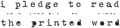
I attended a day-long retreat this week where I enjoyed the gift of spacious silence for reflecting on my creative path—how I got here and where I'm headed. I created this sketchbook spread:
I also made an aspiration card that sums up many of my life principles. You can see it on the Bent Tuba Studio blog.
Showing posts with label sketchbook. Show all posts
May 19, 2012
February 21, 2012
Adventures with Tina the Tuba
I'm so pleased to announce the birth of Bent Tuba Studio - art workshops for adults in Greensboro, NC. The first class will happen March 17, and registration is open until March 10. And if you're wondering about the tuba, you'll want to read this: The Tale of Tina the Tuba
I've also been dabbling in the Sketchbook Challenge. More of my sketchbook images, like the one shown here, will be posted soon at the Bent Tuba blog. I hope you'll play along!
August 10, 2011
May 28, 2011
Scenes from the studio.
I love, love, love having a studio space again. This one is finally really starting to feel like home, and I look forward every weekend to my studio time and the corresponding (almost physical) act of stepping back into my artist identity.
The following are photos of some goodies that live in the studio now, after last weekend's field trip to The Scrap Exchange in Durham, NC. Round things and cylindrical things and fabric/wallpaper/paper samples...
These old friends, which have been packed away since I last had my own studio space five years ago, found a home on my work table today:
And here is a snapshot of the middle section of my inspiration board:
And finally, instigated by Carla Sonheim's book Drawing Lab for Mixed Media Artists, a page of cat doodles.
February 2, 2011
Or is it more?
I'm keeping a visual journal as a form of professional processing. This is what showed up this week.
is this my same broken-open heart
or is it more?
more broken
more open
It's an echo of process work I was doing in 2007 during my first year of graduate school. Which, in its turn, was a continuation of unfinished work from my undergraduate thesis the previous year. Artistic process, like life experience, can be a spiral in which we encounter a theme again and again, but always at a richer level.
November 19, 2010
How can I keep from singing?
It sometimes happens that when I have a strong drive to express something, it seems impossible to name or describe that thing. Or vision, feeling, experience... I don't even have the right word to categorize its very thingness. I can't tell you, with words, what the above image (a sketchbook spread using oil pastel, watercolor, and Sharpie) is about. But when I look at the image, it distills the essence of something I am deeply in touch with right now.
The past couple of weeks have brimmed with connections, potential, joy, and curiosity. And I don't know what else to say about that. In my journal lately, all I can do is make visual marks and make lists; sentences and paragraphs just aren't forming. And that's okay. I'm always a writer, and always an artist, and always a musician, but what I keep discovering is that at any given moment, one of those creative selves is primary and the others recede--and they all support each other.
Among all the intangible experience of recent days, here are the links to some virtual gifts that have arrived in my awareness this week:
Jen Louden's kick-in-the-pants manifesto about following your calling, a.k.a. the thing you want so bad you can barely stand to think about it because there are a thousand reasons you can't possibly walk that path: Holy Selfishness
Meditative artwork by my mentor, Adele Wayman. The images on her website cannot do justice to the visceral gorgeousness of her installations viewed in person, but go take a look anyway. Her art conveys so much about mindfulness that can't be explained with words.
My friend Melanie Weidner, a Quaker artist and spiritual director, is offering a 5-week online course called Creative Spark: Advent Meditations for Creativity and Community, and at an insanely low price. She's wonderful. Please support her if you can.
And Havi's blog post about safe rooms, which is bursting with a lot of really useful stuff as always, offered exactly the thing I needed to hear today: the bit about the V formation. Maybe you'll find it useful, too.
August 24, 2010
Keeping it small and simple
I've been making scrap mini-journals, inspired by this series of posts by Lisa Sonora Beam. We had a box of collage ephemera left over from a recent creativity workshop, and it's been a thrill to juxtapose these ragtag materials in booklet form.
My mini-journals use paper (and paper-like) scraps about 7.5" x 4.5", stacked, folded, and stapled. (They could be larger or smaller, depending on what you have on hand. It might be fun to make tiny ones.) They can be used as-is for journal writing or other notebook functions, but they also have the potential to be further altered and embellished.
In other small-and-simple news, I joined an ATC swap sponsored by the Materials and Media subgroup of the Art Therapy Alliance at LinkedIn. ATCs (artist trading cards) are very small, approximately 2.5" x 3.5", and I wasn't sure I would enjoy creating images on such a tiny canvas. As it turns out, I love it. I like the challenge of making an image simple enough to be expressive in such a small space, but without compromising on the subtle layers and textures that are my favorite part of the art process. I'll be sharing my finished ATCs soon. Meanwhile, you can take a peek at the ATCs already submitted for this swap, courtesy of organizer Melanie Glassey and sponsor Art Therapy Without Borders.
If you try your hand at ATCs or scrap mini-journals, I'd love to see or hear about them in the comments!
July 29, 2010
April 1, 2010
Process: How It All Unfolds
I sometimes describe myself as a process-oriented artist. To me, that means that I value the path of artistic creation as much as the finished work of art. I view artistic process as a sacred relationship between me and the materials--a relationship that continues to develop even after the artwork is “completed.”
Being process-oriented, for me, also indicates that I am continually open to the unexpected. My art usually begins with some particular image or question, but I never know how it may shift and change on its journey toward fullness.
One thing I've noticed about my process over the past few years is that at least half of it happens outside of the studio. (By “studio” I mean any dedicated space, physical or temporal, where one does the tangible work of making art. At the moment my studio is a portable 12” x 12” box of collage materials.) I love the part of the process that is hands-on and messy and in direct relationship with the physical materials, but I also value the intangible stuff that happens outside of that space.
Studio time is expressive time: making, giving voice, giving form. Outside-the-studio process is often receptive: not giving, but receiving. Sometimes this means simply noticing what thrills me, calls me, makes me curious. It could be a particular color that makes my heart sing, or a found object. It could be a line of poetry or the musical bridge of a song. It could take the form of ideas, materials, sensation, or conversations. Receiving can mean soaking in new information and experiences, letting them sift and settle among the inner layers. A connection may emerge: two unrelated pieces of data, juxtaposed, suddenly make sense.
Need a creative jump-start?
• Try changing your perspective, literally: Strategic planning is for the birds
• Take ten minutes for a creative practice.
• Consider: What are you hatching?
Share in the comments: What do you know, or notice, about your own creative process?
October 7, 2009
Retrospective: “Now, Again, Poetry, I Grasp For You”
Now, again, poetry,
…I grasp for you, your bloodstained splinters, your
ancient and stubborn poise
—Adrienne Rich, “The Fact of a Doorframe”
The following is an excerpt from my undergraduate thesis, a year-long exploration of spirituality through making art.
The serpentine form is haunting me. It’s been several months since I saw the documentary Rivers and Tides, in which sculptor Andy Goldsworthy creates breathtaking structures entirely from native natural materials—leaves, thorns, mud, ice, stones—only to document their literal disintegration through time and natural processes. Watching Goldsworthy work, slow and deliberate, sometimes seeing a structure unexpectedly crumble beneath his hands—it’s an otherworldly experience. “There are always these obsessive forms you cannot get rid of,” Goldsworthy admits, sounding as if he himself is haunted by the forms that repeatedly appear in his work—circles, egg-shaped cairns, stone arches, and the snake-like or river-like line that he calls “the serpentine form.”
I love all of Goldsworthy’s work, but I am particularly captivated by the serpentine form in its many versions. He draws it in a canvas of snow atop a frozen pond; he builds it into a wall of dried clay in a museum gallery; he recreates it in wet leaves atop a flat stone. It’s a little different every time, but you’d know it anywhere.
Months before initiating this journey, I created a mixed-media painting that borrowed one version of Goldsworthy’s serpentine form. In it, I used red Carolina clay (mixed with a binder) on a wood support to create the bold line of the form. The background texture was formed by torn sandpaper and found objects from nature that I had painted black. Now I feel a strong leading to work with similar materials and again to borrow Goldsworthy’s serpentine form, but this time to incorporate text. I turn to poetry, the first art form I ever loved. The text itself will create the form—poetry as media.
I find two poems that speak to me of the direct experience of God. The first, “Evening,” is a short poem by Rainer Maria Rilke in which the final stanza describes the “immensity and fear” of the human experience. We search for our place in the universe and the meaning of our presence here, unable to quite grasp the idea that God is both external and within us: “now bounded, now immeasurable, / it is alternately stone in you and star.” We are flawed, stumbling, imprisoned human creatures, and yet we contain sparks of the divine Source from which we spring.
The second poem, “Matins” by Denise Levertov, explores the possibility that God is found in mundane everyday routines, in kitchens and bathrooms and dirty streets as well as in holy places. The final section of this long poem directly addresses the divine: “Marvelous Truth, confront us / at every turn, / in every guise… / Thrust close your smile / that we know you, terrible joy.” Levertov’s word choice indicates her ambivalence about the omnipresence of God. The possibility that the divine is woven into daily life, that no place exists where God is not, brings a mixed reaction that is both welcoming and fearful.
Both poems suggest that the divine is as near as we allow it to be, that the Source is somehow tangible. I see a connection to Annie Dillard’s description of the beliefs of a certain Hasidic teacher: “[A]ll we see holds holiness… This is not pantheism but pan-entheism: The one transcendent God made the universe, and his presence kindles inside every speck of it” (For the Time Being). I am drawn to these poems because they suggest that it is not possible for us to truly be anything other than awed and a little bit afraid of the nearness of God, who dwells within us whether or not we acknowledge (or enjoy) that presence.
I make multiple photocopies of each poem and soak the copies in coffee for a couple of days to dull the bright-white copier paper. Meanwhile, I gesso a pine plank and use charcoal to draw the winding form on the gessoed wood. It pleases me to again be immersed in the landscape of this curving, flowing line. Next, I fill in the background of the form with black gesso, leaving the form as unpainted negative space. I like the bold yet empty look of it, and it remains at this stage for several days.

The following week, tearing the coffee-tinted sheets of text into very small pieces—single words or parts of words—I soak the bits of text briefly in a solution of matte medium and water. I begin to layer the text onto the serpentine form.
Although I am placing the bits of text at random, the repetitive act of handling and placing each piece allows the poems to sink deeply into my awareness. Again and again I see the words “alternately stone in you and star” and “terrible joy”; I carry these words in my heart during the days of working on this piece.
I am constructing a physical form from literal pieces of poetry. The drips of wet binder integrate with the black background as I add numerous layers of text to the winding form. The serpentine form, flat against the background at first, has risen dimensionally from the support.

…A friend suggests that the serpentine form might be more striking—and more true to the influence of Andy Goldsworthy—if I incorporate gradations of color. It feels right. I decide to keep the central part of the form as the lightest tone to give it somewhat of a glow, with the darkest sections at the top and bottom of the form.
I begin painting segments of the form with coffee. It’s a slow process—I have to let each application dry overnight before adding the next. Drips from the coffee mingle with the dried matte medium drips, leaving further traces of the long process of creating this piece.

In the end, the lightest section of text is tinted only by the original soaking, while the darkest sections at the top and bottom of the piece receive up to seven separate applications of coffee. I title the finished piece Direct Experience of God. It is the most visually striking work I have done yet.
There are many images of Andy Goldsworthy’s work available on the Web. A good starting point is here.
September 26, 2009
Reflection: Leave the Roots On
.... Lie down, wounded
angel. I love you. I know there is
no tender palpable miracle happiness.
— Mary Adams, Epistles from the Planet Photosynthesis
Every once in a while, I become reacquainted with old notebooks.
My life is flush with them: sketchbooks and art journals, commonplace books of other people’s poetry, binders of old poems and nonfiction and school papers. scrawled journals chronicling nearly every developmental phase—the identity crisis we call “adolescence,” a bleak period of young adult depression, the secondary identity crisis known as graduate school.
There used to be journals from elementary and middle school, too, but I destroyed them years ago in a fit of 15-year-old embarrassment. I know better than to destroy old journals now, although I have sometimes been tempted to reach for a wide-tipped Sharpie to obliterate passages that make me cringe.
Sometimes, in retrospective reading, I admire my past selves. I cheer them on. I write them imaginary love letters detailing their unknown strengths. I wade through the murk of dilemmas from six years ago, or 16 years ago, and I feel deep compassion for that past-me who was so much braver and smarter and more creative than she realized.
And sometimes I wince at what I wrote, wishing I could do a bit of time-traveling to nudge my past-self in a better direction.
It is a blessing, these riches of so many years of introspection. It's a gift of instant perspective. It reminds me that if my here-and-now 34-year-old self can be so compassionate toward my past selves, there will also come a time when a more experienced me will offer compassion-in-retrospect to the self of my here-and-now. (Notice all the hyphenation. It’s a complex interrelationship that requires the mediation of hyphens. I am now the same self I always was and always will be… and yet, from another perspective, I’m not.)
The only thing that doesn’t change is the urge to document what’s happening. There’s not really a specific motivation. It’s not just about keeping a record for myself, with an awareness of how helpful it is to touch base with all of the old myselves. It’s not just a means of expression for difficult or confusing or overwhelming feelings. It’s not just because I would like someday to share some of these journals with my children, or to revisit them in difficult parenting times as a way to remember what’s hard about being four or 14. It’s not just because I want to leave as many marks on this earth as possible in my time here.
Many thanks to the Notebook Stories blog for featuring this post!
September 14, 2009
Retrospective: Be Very Afraid. And Then Draw It Anyway.
Please take a moment to notice whatever thoughts or feelings arose in you when you first glanced at this drawing.
If your response was That's not a very good drawing. The perspective is all messed up, and it's not very realistic, and there's hardly any detail... you're absolutely right. If we approach this drawing from a sheer technical viewpoint, it gets a failing grade.
On the other hand, if your first thought was That's such a good drawing! Whoever made it was really paying attention to their environment... you, also, are absolutely correct. If we see this sketch as an attempt to interact with and remember a specific moment in time, a way to record an impression, then it succeeds.
And if your reaction sidestepped the question of quality, if you saw this drawing and wondered how and why and by whom it was drawn, if you intuitively identified with the underlying desire to somehow name and contain one little piece of an overwhelming experience... then you are the most absolutely correct of all.
I've never been very interested in debates about how to define Art, or whether a piece of artwork is Good or Not Good based on any specific parameters. What interests me is what type and degree of relationship a created object compels from me. Sometimes I can't seem to stop looking at it—I fall instantly in love. Sometimes I find a piece aesthetically displeasing but, because it elicits a strong response from me, it has succeeded in its job of creating relationship.
This is why I love seeing pages from other people's sketchbooks. In our sketchbooks, we are vulnerable. Sketchbooks are tender places where our drawings sometimes tremble or smear or are left unfinished. I began recording my world in notebooks at age 9. They were purely written journals for the first 17 years, no visual elements until about 2001. Even now my journals and notebooks and sketchbooks are a messy and cryptic mix of handwritten entries, sketches and collages, lists, color-coded schedules, and notes from a smorgasbord of whatever I'm studying lately... but always they are vulnerable and doubtful, with bravery leaking out around the edges.
So here's what I see when I look at this drawing now. I see a young woman holding a green gel pen and a cheap sketchbook, sitting on the back of a couch in an empty common room at twilight, struggling to breathe in and center herself, despite bone-deep anxiety and self-doubt. She is afraid of being caught in the act of being an artist—afraid of being told that she is not an artist and never could be—and she hurries through the drawing so as to escape unnoticed. But she so badly wants to capture the beauty of the mugs drying on a table at twilight. She draws because she can't help seeing and loving the world.
What matters here isn't the drawing itself, or the hurried and anxious way in which it was produced. What this drawing records is a moment in time that mattered, and a desire to document seeing the moment that was stronger than the artist's fear of doing it wrong.
So it is that the drawings I am least proud of are sometimes also the ones that make me feel the most proud.
Subscribe to:
Posts (Atom)